
This Site is currently under Construction, Please excuse our dust!
Library: References & Resources
Under construction. You can read articles below with more to be added soon.
Climate Action Plan
We have written a 28 page climate action plan (CAP) illustrating how the Uncompahgre Valley can work as partners to create projects that reduce our carbon emissions over a 30 year period. Specific projects are tied to renewable energy generation, building energy use, transportation, agriculture, and community. The projects proposed in the CAP are starters and we hope partners will develop specific projects to decrease carbon emissions in The Valley
Climate Action Plan
Climate Action Plan Summary
Supporting Agriculture
Pressures on Agriculture
CCLMontrose Wants to Help
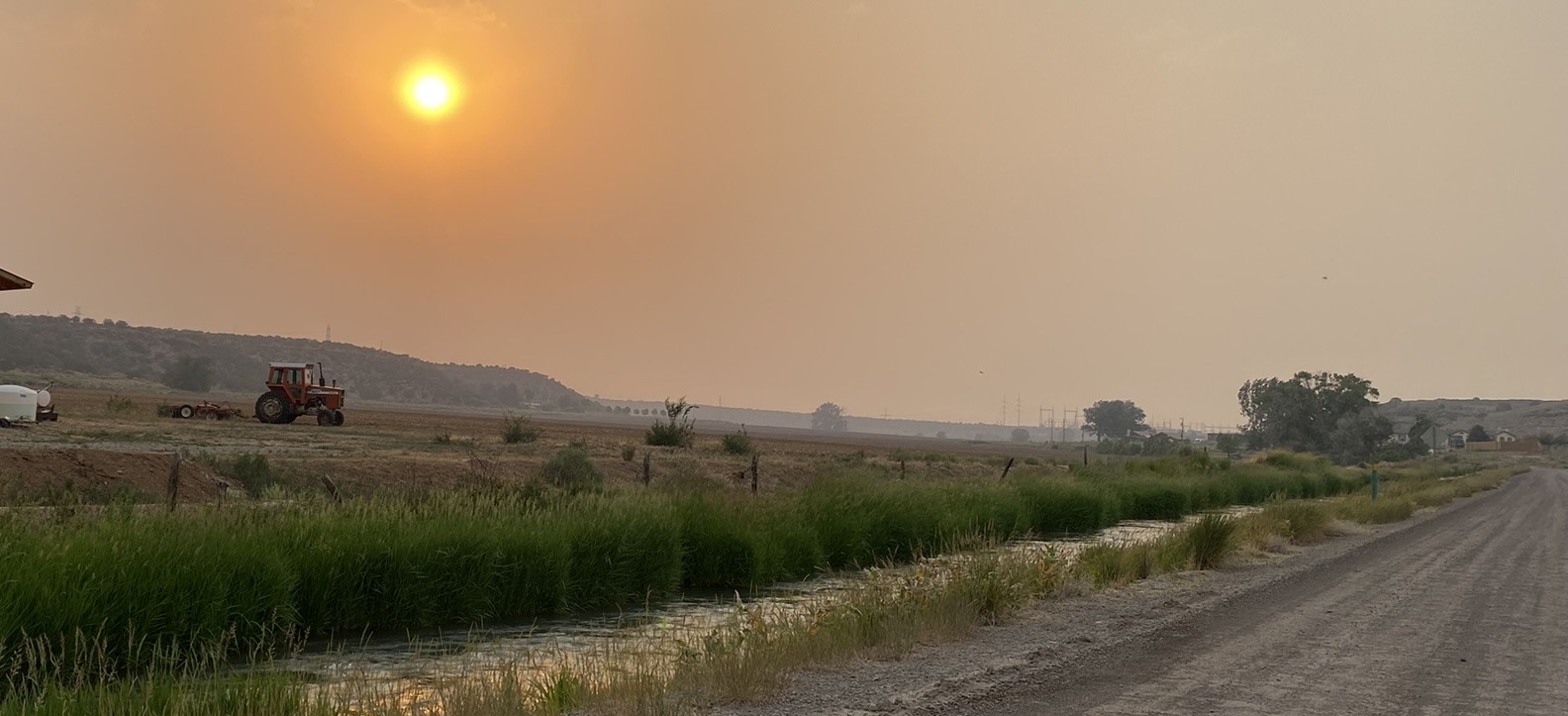
Much of the material in this article is from Nathan Perry’s article on Agriculture on the Western Slope 2026.
CCLMontrose has become acutely aware of some of the pressures on agricultural operations in the Uncompahgre Valley.
Agriculture is both a key economic driver and part of the identity of the Western Slope of Colorado. It drives jobs, supports local businesses, shapes the landscape, and is part of why people choose to live in the region. Agriculture supports 9,123 total jobs in a 5 county region with the majority in pastureland 62.6%, cropland at 18.6% and woodland at 12.9%.
Since 2002 total farmland has dropped by 15–30%. Across the region, 35–44% of producers are over age 65, raising long-term agricultural succession concerns. A little more than half (57.6%) have diversified income streams (e.g., agritourism and secondary crops). But the bottom line is producers do not have a positive outlook regarding the future.
A big contributor to the (-) outlook to the future is 71.8% of producers have been directly impacted by drought in the past three years leading to reduced forage, smaller herds, higher feed costs, overhead costs, poorer crop quality, shortened grazing seasons, and in some cases complete water unavailability, with some operations producing only 40% of normal hay yields.
CCL Montrose would like to work with the agricultural community by working with partners to increase agricultural Efficiency & Resilience through:
- Efficient irrigation and water-saving technologies
- Agrivoltaics with On-farm renewable energy for crops pumps and operations
- Soil-health practices that improve drought tolerance
We look forward as a partner in identifying ways our agricultural community can continue to thrive, expand and maintain a strong economic component in the Uncompahgre Valley in light of increasing heat and drought.
Local Government Climate Action – City of Delta
CCL Montrose wants to congratulate the City of Delta for its continued pursuit of energy opportunities and projects that lower the price of energy (City of Delta has the lowest electric rates on the Western Slope) for everyone in the City while also pursuing renewable energies that help decrease the emission of greenhouse gasses in the Uncompahgre Valley.
City of Delta’s Power Source and Incentives to Save Money
The City of Delta manages the electric grid and distributes electricity throughout the City. At one time the City supplied its own power, but now it gets its energy from Municipal Energy Agency of Nebraska (MEAN). Delta is one of a dozen or so municipalities in Nebraska, Colorado and Iowa where Sandhills Energy and MEAN works to bring group utility scale pricing to smaller communities.
MEAN is not an ordinary energy provider. MEAN’s Board of Directors approved a resolution laying out a vision to a carbon neutral power resource portfolio by 2050.
The resolution authorizes MEAN’s staff to collaboratively work with the MEAN Power Supply Committee to construct policies around resource planning, portfolio optimization and emissions reduction to support future actions to achieve the 2050 carbon neutral goal.
The force driving MEAN’s 2050 Vision is its participating communities. MEAN member communities have a voting representative on the Board of Directors, resulting in direct input into how the organization operates. MEAN also has several committees consisting of community representatives who provide recommendations to the Board.
It’s important to note, while renewable energy will have an increasing role
in MEAN’s resource portfolio going forward, energy produced from baseload power resources is still required for a reliable electric grid when the wind doesn’t blow or the sun doesn’t shine. Technology advancements will be required to achieve a stable electric grid that reliably delivers increased renewable energy.
MEAN has partnered with the City to supply low cost energy which the City has passed onto its citizens as the lowest electricity on the western slope. Also Mean has helped to design and build a 7 acre solar field south of Bill Heddles Recreation Center and it is now producing enough energy for 225 homes. The Delta Armory was also re-built with with a grant from the State into the new Delta Police Department as an all electric building with no gas which probably would have been done without the City controlling the electric grid and the low cost of electricity.
MEAN provides Incentives for saving energy for the Delta’s electric customers and also greenhouse gas emissions. Applications are available on MEANS Website listed below. These incentives can also be combined with the State of Colorado’s incentives to make installing a energy saving appliances much more affordable.
MEAN
Attic insulation up to $300
Smart thermostat $ 30- $100
Heat Pump Incentive
Ductless Mini-Split $ 400 – $1200
Air Source $ 750 – $1,000
Geothermal $ 2,400 – $3,000
Colorado Incentives
Heat pump water heater $1,750
Cold climate heat pump for space heating and cooling $8,000
Heat pump for space heating and cooling $3,000
Electric stove, cooktop, range, or oven $ 840
Electric load service center (also known as electric panel) $4,000
Insulation, air sealing, and ventilation $1,600 Electric wiring $2,500
Total maximum rebate for Colorado $14,000
So it looks like The City of Delta has an excellent energy partner willing to work closely with the City, to take advantage of favorable opportunities for the citizens of Delta, and to supply long term reliable and renewable power to the City of Delta while also recognizing there are issues to overcome in the next 25 years to become carbon neutral
Colorado HEAR program will pay for new appliances
COE Home Electrification and Appliance Rebates
CCL Montrose wants to let you know of an opportunity to upgrade your homes appliances through the Colorado Office of Energy’s HEAR Program.
The HEAR Program will be available to low- and moderate-income households for high-efficiency electric appliances and other upgrades in a single-family home, apartment, condo, or manufactured/mobile home. Owners and operators of multifamily buildings smaller than 50,000 square feet may also qualify for per-unit HEAR rebates. Rebate amounts will be based on your household income relative to your county’s Area Median Income (AMI).
Colorado Incentives
Heat pump water heater $1,750
Cold climate heat pump for space heating and cooling $8,000
Heat pump for space heating and cooling $3,000
Electric stove, cooktop, range, or oven $ 840
Electric load service center (also known as electric panel) $4,000
Insulation, air sealing, and ventilation $1,600 Electric wiring $2,500
Total maximum rebate for Colorado $14,000
Steps for the HEAR Program
Step 1 Check Eligibility
Step 2 Contact a registered Program Contractor
Step 3 Apply For Your Household
Step 4. Complete a home assessment and select upgrades.
Step 5. Install improvements.
CCL Montrose would be happy to help any interested person in answering questions about the HEAR Program or if we can’t answer your question then we could refer you to the Colorado Office of Energy that administers the program. CCL Montrose can be reached at Capclimate@Gmail.com
Solar Panel Leases
Companies like Atlasta Solar are offering solar leases where the company owns the solar panels and sells you the energy made by panels on your roof. You pay a monthly lease payment, which is usually less than your electric bill. The company takes care of the equipment and you get renewable energy. On top of that, if you install a net-meter with DMEA you can also get credit if your system over produces. So if you have wanted solar, but couldn’t afford the high cost check to see if a solar lease will reduce your bill.
Plug-in solar
Plug In Solar is Easy, Affordable and Can Save You Cash

CCLMontrose.Org wanted to let you know of a new options to go solar without having to shell out thousands of dollars.
This new way is called plug-in solar. The panels can be hung over a railing or set up on a rack to support. There is some minor setup to do, but then all you have to do is plug in the panel into the wall. The panel collects the energy from the sun, feeds it through a microinverter and into your plug and you start making your own electricity to use in your own home. DMEA can’t charge you for it – its yours!
Unfortunately, as it stands now, it is illegal to use plug-in solar panels in Colorado. Plug-in solar panels have been used in Europe for some time now and they are legal in Utah. The problem people have with plug-in solar are mainly safety issues such as when there is a blackout and your system puts energy onto the grid shocking a lineman. Fortunately the safety issues can easily be taken care in Colorado House Bill 26-1007 which will make it legal to plug-in solar panels.
Of course 1 panel will only produce enough energy for a few appliances to run. If you are serious you may consider a setup of 4- 300Watt panels. If you want to want to make your own renewable energy this is one of the cheaper ways to do it. When you buy panels for this there are package setups with all the necessary equipment or you can freelance it and buy your own equipment.
Click here PBS interview with homeowner
Click here 2 minute You Tube video on plug-in solar
How do Heat Pumps work?
How Do Heat Pumps Work
The concept behind heat pumps is simple: powered by electricity, they move heat around to either cool or heat buildings by gathering heat from one place and putting it in another place. Many heat pumps can actually be run in reverse, either heating or cooling depending on what’s needed. They can be used for cooling by gathering heat from inside and sending it outside like an air conditioner
The hero in a heat pump is the refrigerant: a fluid that moves in a circuit, soaking up and releasing heat as it goes. Electricity powers the system, pushing the refrigerant around the cycle.
As the refrigerant moves through the heat pump, it’s compressed and expanded, switching between liquid and gas forms to allow it to gather and release heat at different points in the cycle.